Episode 37: Shame (Part 3): Reclamation — The Gift Beneath What You Tried to Fix — Entrée
Feb 02, 2026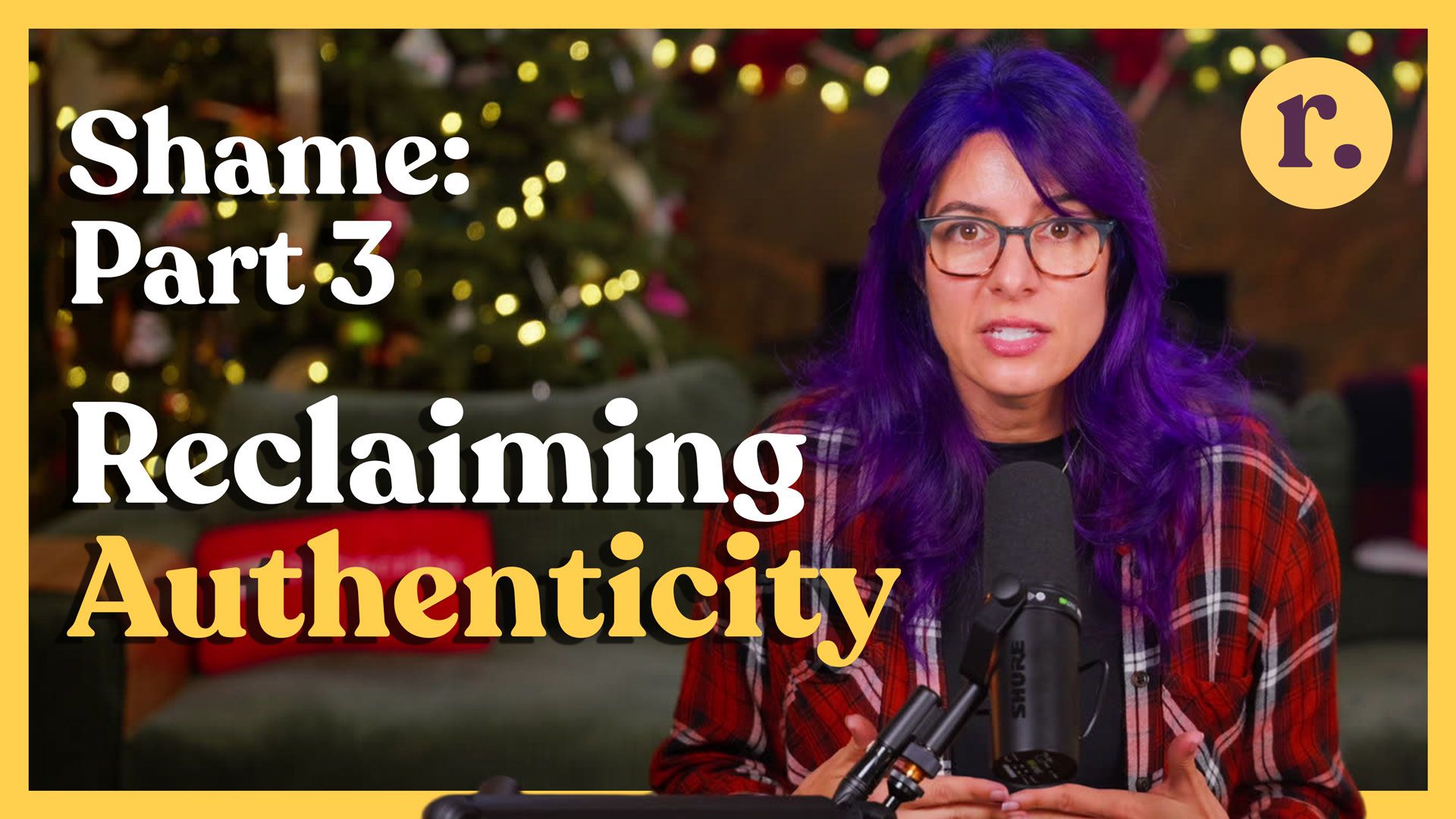
→ Sign up to work with me in my new program!
→ Try the Shame Processing & Reflection Visualization
What if the parts of you you’ve tried hardest to fix… were never the problem?
In Part 3 of the Relish Shame Series, Alyssia explores Reclamation: what shame is often covering and how healing happens not by integrating shame — but by seeing through it. Drawing from personal experience, client work, neuroscience, and contemplative frameworks, this episode offers a powerful reframe: shame doesn’t form around brokenness — it forms around something meaningful and true.
You’ll explore why healing shame doesn’t mean erasing pain or perfecting yourself, but integrating lived experience, protecting parts, and reclaiming authenticity. Through the metaphor of Kintsugi, reflections on neurodivergence and masking, and grounded somatic wisdom, Alyssia shows how what once felt “wrong” may actually be central to who you are.
✨ In this episode, you’ll explore:
- Why shame often forms around sensitivity, care, and truth
- The difference between healing pain and integrating shame
- How authenticity is shaped by lived experience
- Why wholeness requires inclusion, not perfection
- What it means to reclaim parts once hidden by shame
This episode completes the series:
- Part 1: Recognition
- Part 2: Separation
- Part 3: Reclamation
Follow & Connect:
- Join the Newsletter
- IG: @alyssiasheikh
- TikTok: @alyssiasheikh
- YouTube: Alyssia Sheikh
- Email me: [email protected]
- Call our hotline and leave a voicemail! (213) 632-9972
- Book a Self-Trust Session with Alyssia
- The Hoffman Institute (Alyssia is a Hoffman Process teacher; podcast is not affiliated)
Relevant Episodes:
- Shame (Part 1): Recognition — Why Feeling “Not Enough” Feels So True
- Shame (Part 2): Separation — Why Shame Feels Like Who You Are
Relevant Links & Resources:
→ Sign up to work with me in my new program!
→ Try the Shame Processing & Reflection Visualization
Shame, Identity & Self-Concept
- Tangney, J. P., & Dearing, R. L. (2002). Shame and Guilt.
https://psycnet.apa.org/record/2002-00509-000
Meaning-Making & Integration After Adversity
- Park, C. L. (2010). Making sense of the meaning literature: An integrative review of meaning making and its effects on adjustment to stressful life events.
https://psycnet.apa.org/record/2010-03383-011
Post-Traumatic Growth (Nuanced, Non-Bypassy)
- Tedeschi, R. G., & Calhoun, L. G. (2004). Posttraumatic Growth: Conceptual Foundations and Empirical Evidence.
- https://psycnet.apa.org/record/2004-11807-003
Self-Compassion & Wholeness (Integration, Not Fixing)
- Neff, K. D. (2003). Self-compassion: An alternative conceptualization of a healthy attitude toward oneself.
https://self-compassion.org/wp-content/uploads/publications/SCtheoryarticle.pdf
Narrative Identity & Authentic Selfhood
- McAdams, D. P. (2001). The psychology of life stories.
- https://journals.sagepub.com/doi/10.1037/1089-2680.5.2.100
Stay connected!
Want mindfulness tools and podcast updates delivered to your inbox? Join the community for practices, stories, and inspiration to keep you grounded.
We hate SPAM. We will never sell your information, for any reason.